
Seasonal Talent Sourcing in Retail & Logistics: Are you ready for Peak 2025?
Seasonal Workforce Strategies
Seasonal staffing peaks are no longer just about filling shifts anymore. In 2025, readiness means competing for scarce talent, adapting to new worker profiles, and rethinking motivation. The companies that win aren’t merely faster at hiring they treat seasonal staffing in retail and logistics as systems: demand forecasting at the site/day/hour level, diversified sourcing, rapid onboarding, agile scheduling, and, crucially, rigorous tracking and reconciliation of time, cost, compliance, and outcomes. If you can’t measure it weekly and reconcile it to the P&L, you can’t scale it.
What changes now?
Seasonal on-demand workers are more diverse (seasonal jobs in retail and logistics attract gig-hybrids, over 60s, and boomerangs), attention is fragmented across new channels (community chats, short-video CVs, campus Discords), and expectations are higher (self-service scheduling, instant perks, respectful management). In both seasonal staffing retail and seasonal staffing logistics, readiness is now a closed loop:
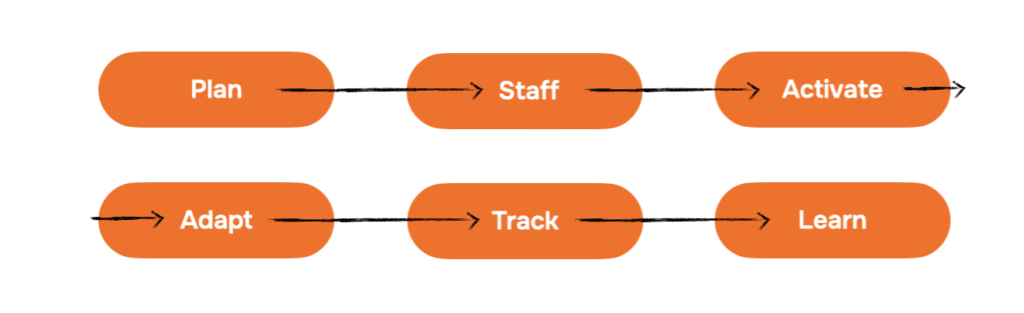
You anticipate demand, hire for both speed and fit, shorten time-to-productivity, let people choose their own shifts, and track the entire flow so every decision produces a data you can act on next week – not next year.
The New Seasonal Workforce
Forget the stereotype that “temps are students.” Today’s seasonal workforce in retail and logistics is more diverse than ever:
- Hybrid earners
Freelancers and gig workers topping up income during peak months. - Silver economy
Workers aged 60 and over are joining retail and logistics. They bring reliability, but onboarding needs to be simpler and more personal. - Boomerang staff
People who return year after year. Treat them as
your seasonal alumni network, they are your fastest, most loyal hires.

Motivation Beyond Money
Seasonal workers aren’t just motivated by paycheques. What keeps them engaged?
- Immediate perks:
free transport, meals, or same-week payments and bonuses matter more than end-of-season payouts. - Community effect:
branded T-shirts, staff WhatsApp groups, or small competitions build belonging. - Respect and recognition:
flexible scheduling for parents, shift-buddy systems for first-timers, or public acknowledgements for performance.

Where to Find Talent in 2025
Traditional job boards are overcrowded. New channels are emerging:
- Community Chats (WhatsApp, Telegram)
Posting shifts in local WhatsApp or Telegram groups connects you directly with active, pre-engaged talent already seeking flexible work. It enables rapid responses and helps build a reusable, location-based talent pool for future peak periods. - Short Video Resumes (TikTok, Instagram)
Short video introductions on TikTok or Instagram offer instant insight into personality, communication style, and energy — all critical for frontline roles. They help filter out mismatches early and spotlight high-potential candidates, without needing a CV. - Campus Discords & Micro-Groups
Student Discord servers and niche community channels provide direct access to early-career talent through platforms they use daily. These channels often outperform traditional job boards in speed, trust, and engagement. - Location-Based Apps (like Catchers)
Apps like Catchers connect you with pre-vetted, reviewed, and shift-ready workers nearby — with automated onboarding and compliance fully built in. This gives you speed, quality, and control in a single system, without the usual administrative burden.

Smarter Onboarding & Scheduling
Speed is still critical, but flexibility now defines success:
- Rapid onboarding: digital ID checks and contracts, video refreshers, buddy systems. The goal is to get a new hire shift-ready within 48 hours
- Agile scheduling: self-service apps where workers choose or swap shifts. This reduces no-shows by double digits.
- Data-driven planning: AI forecasting helps managers plan not just for “average demand,” but for multiple scenarios.
Accounting: Proving It Worked
Seasonal readiness isn’t complete without measurement. Even the best hiring and onboarding strategies mean little if you can’t prove their impact on performance and costs. Consider it a seasonal ledger:
- Did your forecasts match reality?
- How fast did new hires become productive?
- What was the true cost per staffed hour?
- Did self-scheduling or new sourcing channels actually reduce no-shows?
The principle is simple: track, reconcile, and learn every week. Close the loop by linking seasonal staffing decisions to sales, customer experience, and compliance. That way, seasonal readiness becomes not just an operational fix, but a measurable business advantage.
Relieving the Pressure on Internal HR:
Why Smart Outsourcing Matters
Seasonal hiring at scale pushes HR and operations teams to the edge — juggling sourcing, onboarding, compliance, scheduling, payroll, and reporting, often within days. As volume increases, even small inefficiencies compound into risk and burnout.
- Less admin, more strategy: Platforms like Catchers automate sourcing, onboarding, and compliance, contracting and payroll – saving over 8 hours per manager per week.
- 70/30 staffing done right: Leading retail and logistics companies outsource 20- 30% of temporary staffing to stay agile without overloading HR.
- From firefighting to foresight: With operational drag reduced, HR teams can focus on retention, employee experience, operational excellence and long-term planning.
- Lower risk, higher compliance
Modern platforms ensure compliance is baked in — not bolted on. That includes real-time verification, auto-generated logs, GDPR-aligned data management, and full audit trails. By shifting compliance from manual to systemic, risk drops while confidence rises. - Better candidate and manager experience
Automated workflows and clear communications make life easier not only for HR, but for frontline managers and temp workers too. Fewer errors, smoother handovers, and faster issue resolution translate to higher retention, lower no-shows, and stronger shift performance.
The Seasonal Workforce Sourcing Playbook 2025:
Structure for Scale
- 3–4 months before
Forecast demand by day,store and hour level. Activate alumni pool. Explore new sourcing channels (community chats, video resumes, platforms like Catchers).
- 2 months before
Secure your 70% core team. Test rapid onboarding flow (under 48h). Prepare managers and compliance processes.
- 2 weeks before
Finalise schedules. Communicate perks. Secure remaining shift coverage with a 30% flexible layer reducing HR load via automation.
- During season
Track KPIs weekly: attendance, churn, no-shows, satisfaction. Adjust shifts via self-service apps. Free up HR focus on culture and retention, not firefighting.
- After season
Re-engage top performers. Run feedback surveys. Use reporting to improve next season’s outcomes and reconcile outcomes directly to P&L.

Seasonal readiness in 2025 isn’t just HR function. It is a brand strategy.
Meeting seasonal demand at scale requires more than speed — it demands a system that integrates forecasting, sourcing, onboarding, scheduling, and compliance into one continuous flow. In 2025, the most effective HR and operations teams treat workforce flexibility not as a backup, but as a strategic function — essential to brand performance, cost control, and operational resilience.
Catchers is built to power that shift.
By combining real-time demand intelligence with location-based sourcing, 48-hour digital onboarding, and automated presence tracking and weekly payments, Catchers turn seasonal chaos into a process you can plan, measure, and improve — week after week. Compliance is embedded. Reporting that drives decisions. And teams gain back time to focus on what matters: delivering service, protecting brand, and scaling with confidence.
Seasonal readiness is no longer just logistics. It’s how great operations win.